Store Location
Taco-Motos Amsterdam
Petroleumhavenweg 26, 1041AC Amsterdam, Netherlands, Phone 0031613658408
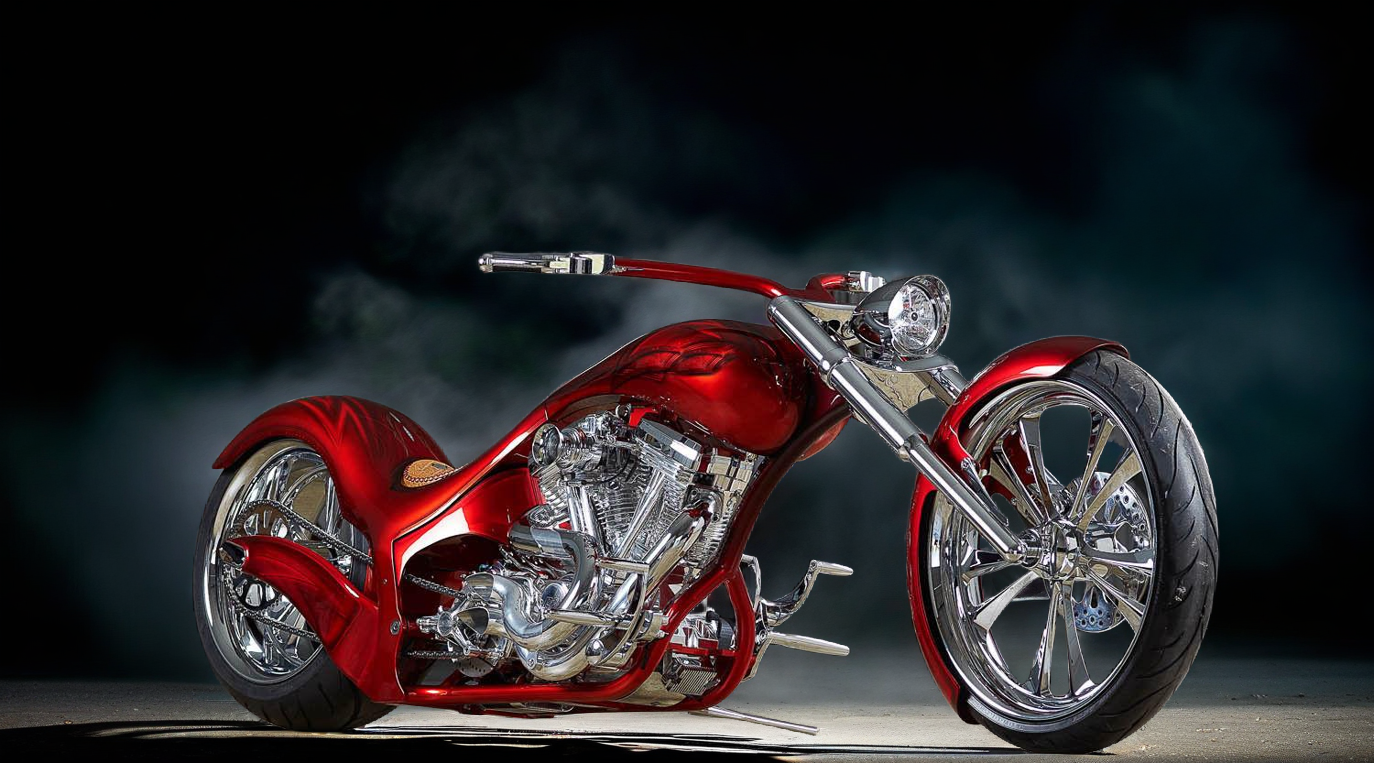
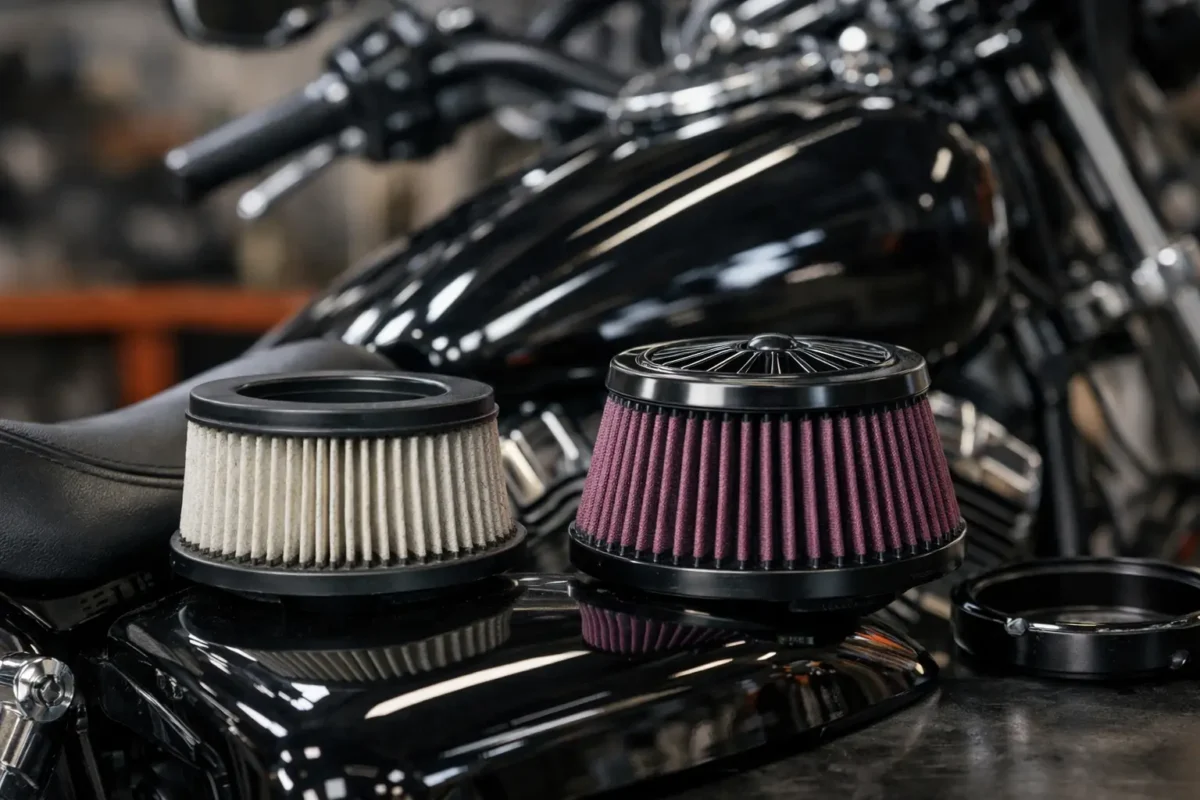
If your Harley feels a little flat off idle, sounds choked up, or still wears the stock intake from years ago, a harley air filter upgrade is usually one of the first places to look. It is also one of the most misunderstood mods on these bikes. Riders hear bigger airflow, more power, better sound – and all of that can be true. But the real answer depends on how you ride, what engine you have, and whether the rest of the setup supports it.
Your air filter is not just a service item. On a Harley-Davidson, the intake assembly affects how much air the engine can pull, how clean that air stays, and how the bike responds under load. The stock system is built to satisfy noise, emissions, packaging, and broad reliability targets. That means it is usually fine for everyday use, but not always ideal if you want sharper throttle response or if you have already changed the exhaust and tuning.
A less restrictive intake can let the engine breathe more freely. On many models, that shows up as better response when you crack the throttle and a little more urgency through the midrange. On a built motor or a bike with cams and exhaust work, the intake becomes even more important. An engine that wants more air will not get the best result through a heavily restricted stock filter setup.
That said, more airflow is not automatically better in every situation. Filtration quality matters. So does fitment. So does tuning. A flashy exposed element that flows well on paper is not much use if it pulls in water easily, interferes with your leg position, or leaves the engine running lean.
If your bike is completely stock and you are happy with how it runs, an intake upgrade is not mandatory. A fresh stock-style replacement may be all you need. But there are a few situations where an upgrade makes practical sense.
The first is when the bike already has slip-ons or a full exhaust and you want the intake side to match. Harley engines respond best when changes make sense as a package. Freeing up the exhaust without thinking about intake and fueling often leaves performance on the table.
The second is when you want a cleaner serviceable filter. Many aftermarket setups use washable and reusable elements. For riders who put on miles, that can be more convenient than replacing disposable filters over and over.
The third is when appearance matters. On a Harley, the air cleaner is a visible part of the bike. A round classic cover, a compact performance intake, or an exposed filter can change the whole right side of the motorcycle. That is not a small detail on a custom build.
The fourth is engine demand. If you are running cam upgrades, head work, a bigger throttle body, or other performance parts, the intake becomes a real bottleneck if it is left stock.
This is where a lot of riders get sold on the wrong part. There is a big difference between an intake that looks aggressive and one that suits the bike.
Some kits are built mainly for style and basic airflow improvement over stock. Others are designed around serious performance use with larger internal volume, smoother backing plates, and better support for higher horsepower combinations. Then there are compact systems that keep a tighter profile for rider comfort, and exposed filters that maximize flow but can be less forgiving in bad weather or dirty conditions.
Filter material also changes the character of the setup. Cotton gauze filters tend to flow well and are popular on performance builds, but they need proper service intervals and careful oiling. Synthetic media often offers strong filtration with less maintenance drama. Foam filters can work well in certain environments, especially where dust is a concern, but not every rider wants that style of upkeep.
There is no single best answer for every Harley. A Milwaukee-Eight touring bike used for long highway days has different needs than a Dyna ridden hard around town, and both are different again from a Softail custom build where form matters as much as function.
This is the part that gets skipped too often. If you install a high-flow intake and do nothing else, you may get a small improvement in sound and throttle feel. But the full benefit usually comes when the fueling is adjusted to suit the added airflow.
Modern Harleys are sensitive to intake and exhaust changes. Once you alter how the engine breathes, the calibration may no longer be ideal. Sometimes the bike will still run acceptably. Sometimes it will feel uneven, hotter than normal, or weaker in the areas where you expected improvement.
A proper tune ties the package together. It helps the engine use the extra air instead of just compensating around it. That is where a simple bolt-on starts acting like a real upgrade.
This matters even more if your goal is not peak dyno numbers but rideability. Most street riders care more about clean response, steady low-speed behavior, and stronger roll-on power than a bragging-rights horsepower figure. Good tuning is what makes those gains noticeable.
Fitment should be the first check, not the last. Harley model families may look similar, but year range, throttle body size, breather layout, and sensor compatibility all matter. An intake that fits one Twin Cam may not fit another the way you expect.
Riding conditions matter too. If you ride in heavy rain, a fully exposed filter needs more thought than a sheltered design. If your bike sees dusty back roads, filtration efficiency may matter more than chasing every last bit of airflow. If you spend long days in the saddle, make sure the air cleaner does not crowd your knee or shin.
Then there is serviceability. Some riders are happy cleaning and re-oiling filters on a schedule. Others want to install it and forget about it for a long time. Be honest about which type you are.
And finally, be realistic about your build plan. If this is the first step toward cams and a tune later, buy an intake that still makes sense at the next stage. If the bike is staying mostly stock, you may not need the most aggressive option on the shelf.
A lot of owners frame this as an all-or-nothing choice when it is not. Sometimes the right move is a quality replacement filter in the stock housing. That keeps the original look, avoids fitment headaches, and can still improve breathing depending on the filter design.
A full intake upgrade makes more sense when you want a visible change, a less restrictive assembly, or a setup that supports additional engine work. It is the better choice for riders building the bike around performance or a specific custom look.
The middle ground is often the smartest route. Not every bike needs the biggest open-element system available. A well-made, properly fitted intake with sensible airflow gains can be the better everyday solution.
On the lift and on the road, the most common feedback after a well-matched intake upgrade is not usually massive top-end power. It is better response. The bike feels less lazy when you roll into the throttle. It sounds more alive. The engine often picks up revs with less effort.
That is why the mod stays popular. It changes the character of the bike in a way you can actually feel. But the good results come from matching parts to purpose, not from buying whatever has the loudest marketing.
At Taco-Motos Amsterdam, we see the same pattern all the time – riders get the best outcome when the intake choice matches the bike, the riding style, and the rest of the combination. That is as true for a mostly stock cruiser as it is for a more serious performance build.
If you are considering a harley air filter upgrade, think past the cover and the claimed airflow numbers. Start with how your bike is used, what other mods are already in place, and whether you are prepared to tune it correctly. Get that right, and the upgrade earns its place every time.
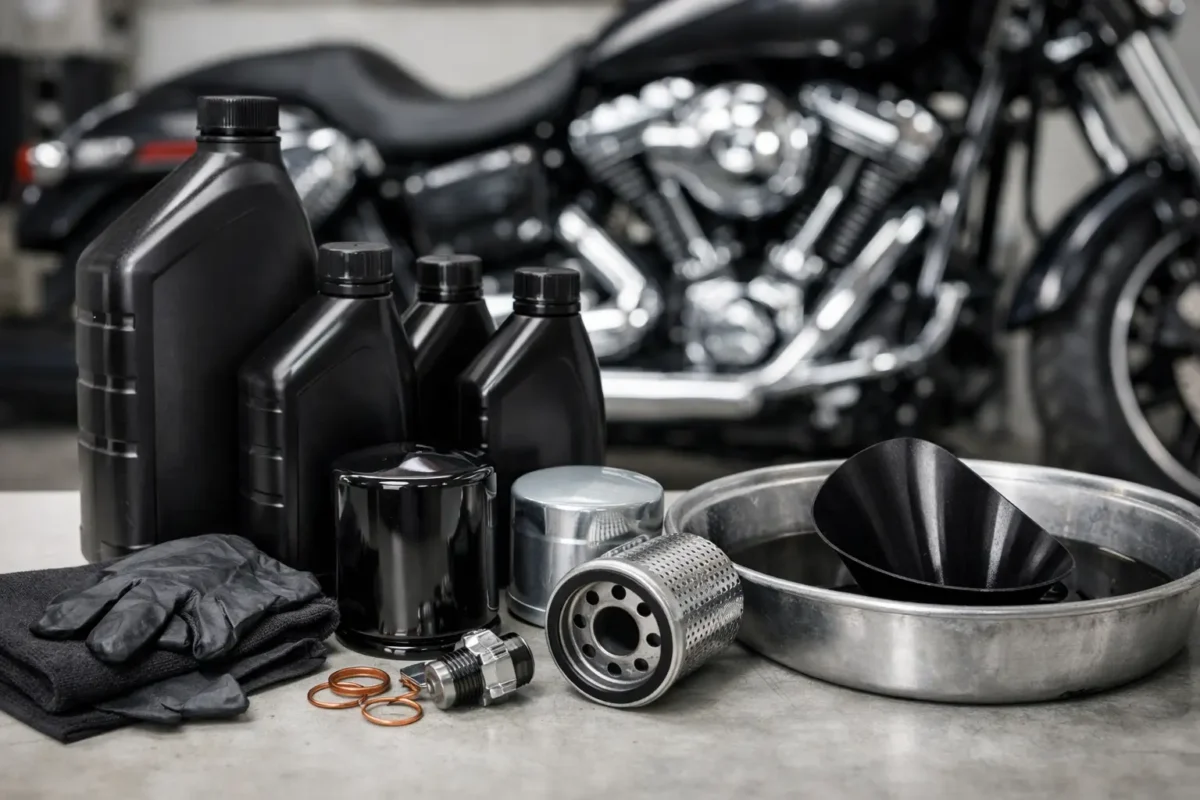
A harley oil change kit looks simple until you order the wrong one and end up with the wrong filter, the wrong fluid spec, or a missing O-ring on service day. That is usually the difference between a quick garage job and a bike stuck on the lift while you wait on parts. If you ride a Harley, the smart move is to buy a kit that matches your engine, your service needs, and how you actually use the bike.
On a Harley, an oil change is not just one drain plug and one bottle of oil. Most models need attention to three separate systems – engine oil, transmission fluid, and primary chaincase fluid. Some kits cover only the engine side. Others are built as full service kits with all three fluids, a filter, and the small hardware that tends to get overlooked.
That distinction matters more than people think. A rider may search for a harley oil change kit expecting a complete service package, then receive something meant for engine oil only. The label may still sound correct, but the contents do not match the job. If you service your own bike, clarity matters as much as brand choice.
The other reason to pay attention is fitment. Harley-Davidson has changed engine platforms, filter sizes, fluid requirements, and service details across Evolution, Twin Cam, Milwaukee-Eight, Sportster, and older Big Twin models. A kit that works on one generation may not be right for another. Even within the same family, model year can change what belongs in the box.
A proper kit starts with the basics: the correct oil filter, the correct grade and quantity of oil, and the sealing washers or O-rings needed for the service. If it is a complete motorcycle service kit, it should also include transmission and primary fluids in the right quantities for that platform.
This is where cheap kits often fall short. They may save a few dollars upfront, but then leave out the drain plug seal, include a generic filter, or package fluids that are technically usable but not ideal for the bike. For a Harley owner who rides hard, rides long distance, or simply wants consistent service records, those shortcuts are not worth much.
A better kit does not need fancy packaging. It needs correct fitment, known fluid quality, and no guesswork. Workshop logic applies here – if every part in the kit saves time and prevents mistakes, it is doing its job.
This is the first decision to make, and it depends on what service you are actually performing. If you just changed the transmission and primary recently, an engine oil kit may be enough. If the bike is due for scheduled service, a full 3-hole kit is usually the smarter buy.
On most Harleys, separating those intervals can make sense for some riders, but not for all. A bike used for short trips, city traffic, hot weather, or aggressive riding will contaminate fluids differently than a bike used for steady highway miles. That is why a one-size-fits-all answer does not exist. The right kit depends on the bike and how it is ridden.
For many owners, a complete kit keeps service simple. You know everything is fresh, the fluid types are matched to the bike, and there is less chance of forgetting one part of the job. For riders who handle maintenance themselves, that convenience is not cosmetic – it reduces errors.
The most important filter for choosing a kit is not the oil brand. It is the bike itself. Start with the exact model, year, and engine platform. A Road Glide with a Milwaukee-Eight does not share the same service needs as a carbureted Evo Sportster, and treating them as if they do is where ordering mistakes start.
Check whether the kit is intended for Touring, Softail, Dyna, Sportster, or Trike applications. Then confirm the model year range. If the product description is vague, that is a warning sign. Harley fitment should be precise.
You also want to know whether the bike is stock or modified. External oil coolers, remote filter setups, deep sumps, and performance engine builds can change fluid volume or filter choice. In those cases, a standard kit may still work, but only if you know exactly what has changed on the bike. Modified Harleys are common, and service parts should be selected with that in mind.
Yes, but not in the way marketing usually suggests. What matters most is that the fluid meets the needs of the engine and the riding conditions, and that the filter is built well enough to do the job. Riders tend to have strong preferences about oil brands, and that is fine. The key is consistency and correct application.
A quality filter with reliable construction is not the place to cut corners. The same goes for primary and transmission fluids. Some riders prefer to run one brand across the whole bike for simplicity. Others mix brands based on specific performance goals. Either approach can work if the product specs are right and the service is done properly.
What does not work well is buying a bargain kit with unknown filter quality and generic fluid just because the price looks good. Harley engines are expensive. Saving a small amount on consumables is not much of a strategy.
The most common mistake is assuming every kit is complete. Many are not. Some include engine oil and filter only. Some include all fluids but no drain plug seals. Some are listed broadly for a model family but fit only certain years.
The second mistake is buying by viscosity alone. Riders will search for 20W-50 and assume that is enough. It is not. You still need the right quantity, the right filter, and the right supporting hardware.
The third mistake is ignoring riding conditions. If the bike sees heavy traffic, hot climates, long-distance touring, or performance use, service planning should reflect that. The cheapest off-the-shelf kit may cover the bare minimum, but that does not automatically make it the best option for the bike.
Another issue is forgetting that service quality is about more than the parts box. If the drain plug threads are damaged, the filter mount has residue, or the previous service was done poorly, even a correct kit will not fix bad workshop habits. Good parts still need good practice.
A kit makes the most sense for owners who want a straightforward service with everything matched ahead of time. It is efficient, easier to verify, and usually better value than piecing together every item one by one. For routine maintenance on a mostly stock Harley, a well-built kit is hard to argue against.
Buying parts separately makes more sense if your bike is modified, if you are particular about mixing specific brands, or if you service different systems on different intervals. Some experienced owners also prefer to build their own service package because they already know exactly which filter and fluids they trust.
Neither approach is wrong. It depends on how the bike is set up and how hands-on you are. The point is not whether a kit is always better. The point is whether it removes guesswork without creating new fitment problems.
From a workshop standpoint, the best kit is the one that gets the job done correctly the first time. That means accurate fitment data, known fluid quality, correct quantities, and no missing service items. It also means understanding when a standard kit is not enough because the bike has performance upgrades or non-stock components.
That is where a Harley specialist earns their keep. A general parts seller may list broad compatibility and leave the rest to the customer. A shop focused on Harley service tends to look at the actual bike, the service interval, and the rider’s use case. Taco-Motos Amsterdam works from that specialist mindset – parts need to fit the bike and the job, not just the search term.
If you are ordering online, treat the kit the same way you would treat any serious service part. Verify the model, verify the year, and verify what is included. If anything in the listing feels unclear, stop there and sort it out before you hit buy.
A good harley oil change kit should make maintenance easier, not more complicated. Buy the one that matches your bike, covers the service you are actually doing, and uses parts you would trust inside your own engine. That usually costs less than doing the job twice.
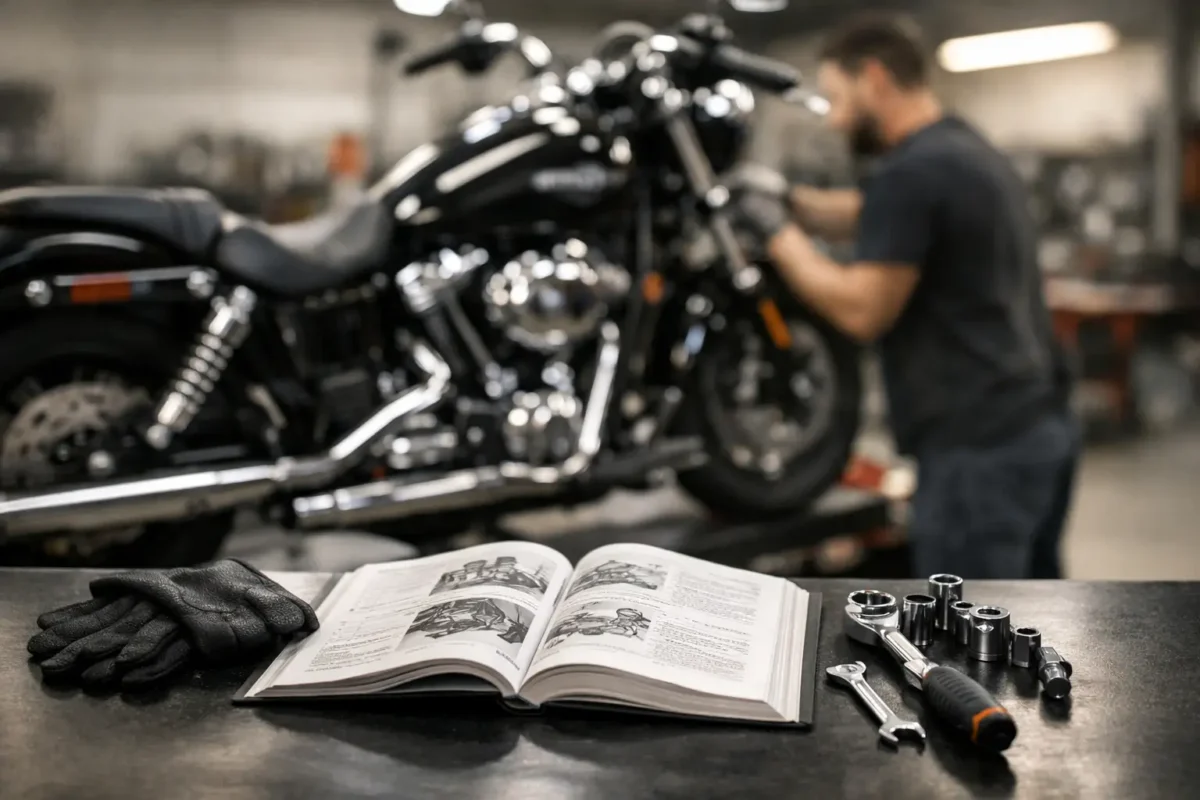
A stripped drain plug, a crossed-up torque value, or one missed routing detail on a clutch cable can turn a simple Saturday job into an expensive mess. That is exactly why a Harley Davidson service manual still matters, even for riders who know their way around a toolbox. On these bikes, details count. The difference between doing the job right and doing it twice usually comes down to having the correct procedure in front of you.
A service manual is not just a stack of workshop instructions. It is the factory reference for how a specific Harley model is built, serviced, inspected, and reassembled. It tells you torque specs, wear limits, fastener locations, fluid capacities, wiring paths, test procedures, and the order the work should be done.
That matters because Harleys are simple in some ways, but they are not careless machines. A Twin Cam top-end job, a Milwaukee-Eight service interval check, or electrical fault tracing on a Touring model all depend on exact information. Close enough is where problems start.
A good manual also saves time. If you already know how to pull a primary cover, the value is not basic instruction. The value is knowing which fastener gets threadlocker, what gasket surface needs inspection, and what measurement tells you the part is still serviceable.
Not all manuals are equal, and not all years are interchangeable. Harley-Davidson changed a lot over the years – engines, electronics, torque values, wiring layouts, fastener specs, and service procedures. A manual for one model family may get you in the ballpark, but ballpark is not good enough when you are setting primary chain tension, checking charging system output, or diagnosing ABS faults.
This is where riders get tripped up. They assume a Softail is a Softail, or a Sportster procedure is the same across several years. Sometimes it is close. Sometimes one change in sensor setup, connector location, or bolt spec makes the old procedure wrong.
The right manual matches the model, year range, and ideally the exact platform you are working on. If the bike has been modified, the factory manual still gives you the baseline. That is critical when you need to separate stock system issues from problems introduced by aftermarket parts or past repair work.
The most useful sections are the ones riders return to over and over. Maintenance schedules are the obvious starting point, especially for fluid service, brake inspection, drive belt checks, and routine adjustment points. But the real value usually shows up deeper in the book.
This section covers the work most owners either do themselves or want to understand before bringing the bike into the shop. Oil and filter changes, transmission fluid, primary fluid, spark plugs, air filter service, clutch adjustment, and brake system checks all live here. On newer bikes, these sections also clarify when inspection matters more than replacement.
This is where the manual earns its keep. Torque values for axle hardware, triple trees, rocker covers, derby covers, brake components, and engine fasteners are not guesswork. Neither are service limits for rotors, clutch plates, bearings, and charging components. If you skip these numbers, you are no longer repairing the bike properly. You are gambling.
Electrical work is where many home mechanics hit a wall. A service manual gives you connector views, wire colors, circuit paths, and test procedures. That lets you stop swapping parts and start diagnosing. If a bike has charging issues, lighting faults, sensor trouble, or intermittent no-start behavior, this section can save hours.
The sequence matters more than people think. A manual shows how assemblies come apart without damaging adjacent parts and how they go back together without preload, misalignment, or leaks. This is especially important on top-end work, primary service, front-end service, and internal transmission repairs.
A service manual is strongest when the bike is close to stock and the problem is mechanical or electrical within the original system. It is ideal for regular maintenance, fault tracing, gasket replacement, chassis service, and factory-spec rebuild work.
Where it gets less complete is on heavily customized bikes. If the bike has an aftermarket ignition, non-stock bars with rerouted wiring, a tuner, custom lighting, air suspension, or modified fuel delivery, the factory manual may only tell part of the story. You still need product-specific instructions and some shop judgment.
That does not make the manual less useful. It just means the manual is your foundation, not the whole answer. On custom Harleys, the real work is often understanding how the aftermarket setup interacts with the original platform.
This depends on the job, your tools, and your tolerance for risk. A lot of Harley owners can handle fluid changes, battery replacement, brake pad swaps, basic inspection work, and some bolt-on installation with a manual and decent tools. Those jobs mostly reward patience and attention.
The line gets sharper when you move into engine internals, driveline work, wheel alignment issues, electrical diagnosis, suspension geometry, or tuning-related problems. The manual may show the factory procedure, but it cannot supply feel, experience, or the specialty tools needed to measure correctly and avoid damage.
There is also the issue of what happens when the manual says to inspect a part and replace it if outside limits. That sounds simple until you need to measure runout, assess bearing condition, identify heat damage, or decide whether a reused fastener is still acceptable. That is where specialist workshop experience earns its value.
For riders who want to understand their bike but do not want to risk major mistakes, the best approach is often mixed. Use the manual to stay informed, handle the simple work yourself, and bring the heavier jobs to a Harley-focused shop.
The first mistake is using the wrong year or model manual. The second is reading only the procedure and skipping the notes, warnings, and inspection specs. Those notes are usually where the expensive lessons are hiding.
Another common problem is treating torque values as optional if the fastener feels familiar. Harley hardware is not magic. Covers strip, threads pull, and under-torqued fasteners back out just like on any other machine. Following sequence and spec matters.
Then there is the parts issue. The manual may assume OEM configuration, while the bike in front of you is fitted with aftermarket exhaust, intake, controls, or electrical accessories. If something does not line up exactly with the manual, stop and confirm what has been changed before forcing the repair path.
There is a difference between owning the information and knowing how to apply it. The manual gives you the factory method. It does not tell you whether a previous owner rounded a fastener, pinched a wire, mixed hardware, overused sealant, or installed the wrong part three years ago.
That is why experienced Harley shops still rely on manuals while also relying on inspection habits and platform knowledge. A manual keeps the work anchored to spec. Experience tells you what tends to fail, what gets overlooked, and where a problem is likely to spread.
For serious owners, that is the right way to look at it too. A Harley Davidson service manual is not a badge of self-sufficiency. It is a working reference. Whether you wrench at home or bring your bike to a specialist like Taco-Motos Amsterdam, the point is the same – the bike deserves the right information before the first bolt gets turned.
If you are maintaining, restoring, or sorting out a Harley, keep the manual close, keep your assumptions in check, and let the specs do their job before your mistakes get the last word.
A lot of riders say they just need an oil service when what the bike really needs is maintenance. That mix-up matters. When you compare oil change vs maintenance, the difference is simple: one replaces fluids and filters, while the other looks at the condition of the motorcycle as a whole.
On a Harley-Davidson or any V-twin, that distinction can save you money, prevent breakdowns, and keep small issues from turning into expensive repairs. Fresh oil is critical, but it will not fix a loose primary chain, worn brake pads, a charging problem, or a throttle cable that is starting to bind. If you ride often, ride hard, or own an older bike, knowing where oil service ends and real maintenance begins is part of owning the machine properly.
An oil change is one specific service. In most cases, that means draining old oil, replacing the oil filter, and refilling with the correct grade and amount of oil. On many Harleys, riders may also talk about changing all three fluids – engine oil, primary fluid, and transmission fluid. That is still fluid service. It is important, but it is not the same thing as a full maintenance visit.
Maintenance is broader. It includes scheduled inspections, adjustments, wear-item checks, and replacing parts or fluids based on mileage, time, or condition. Depending on the model and service interval, maintenance can include spark plugs, air filter inspection or replacement, drive belt checks, clutch adjustment, brake system inspection, fastener checks, tire condition, battery health, steering head play, suspension issues, and a scan for trouble codes on newer fuel-injected bikes.
If you want the short version, oil service keeps lubrication in shape. Maintenance keeps the motorcycle itself in shape.
The confusion is understandable because oil service is the most visible recurring job. Riders remember mileage stickers, service intervals, and the cost of fluid changes. It feels like the main thing because it happens often and because engine oil is such a big deal on an air-cooled or partially air-cooled V-twin.
The problem is that a Harley is not just an engine with oil in it. It is a complete system with drivetrain components, brakes, suspension, electrical parts, and chassis hardware that all age at different rates. A bike can have clean oil and still be overdue for real attention.
This shows up a lot on motorcycles that sit for long periods. A low-mile bike may look fine on paper, but time can still harden seals, weaken batteries, absorb moisture into brake fluid, and crack tires. In that case, the rider says, “It only needs an oil change,” but the bike may need a proper inspection more than anything.
A basic oil service is straightforward. The old oil comes out, a new filter goes in, and the system gets refilled to spec. If it is a three-hole service on a Harley, the primary and transmission fluids are replaced as well.
A good shop may also give the bike a quick once-over while it is on the lift, but that is not the same as a scheduled maintenance procedure. A visual check is helpful. It is not a substitute for measured inspection, adjustment, and diagnostic work.
Maintenance is tied to service intervals and actual bike condition. On many Harleys, that may mean a 5,000-mile service, a 10,000-mile service, or seasonal work based on storage and use. The exact list depends on the model, year, modifications, and how the bike is ridden.
A proper maintenance visit typically checks systems that an oil change does not touch in any meaningful way. Brake pad thickness, rotor wear, tire date codes, charging output, fastener torque, cable operation, belt alignment, wheel bearings, suspension leaks, and intake or exhaust issues all fall into that category. On a tuned or modified bike, maintenance may also mean checking that everything still works together the way it should.
Sometimes an oil change really is enough. If the bike is already up to date on scheduled maintenance, has no symptoms, and is simply due for fluid service, there is no reason to invent extra work.
That is especially true for riders who keep up with their intervals and know the condition of their bike. If your Harley recently had a full service and all you need now is fresh oil after the recommended mileage, an oil change is exactly the right job.
The key is honesty about the bike’s history. If you do not know when the brakes were last checked, when the battery was tested, or whether the primary chain has been inspected, then saying it only needs oil may be more hope than fact.
If a bike has been sitting, recently changed hands, has unknown service records, or is starting to show small issues, maintenance matters more than a simple fluid change. This is where problems get caught early.
Maybe the idle feels uneven. Maybe the rear brake feels soft. Maybe the charging system seems weak after a short ride. None of those issues are solved by new oil. They need diagnosis and inspection.
Older Harleys and custom builds deserve even more attention here. Modified bikes often have parts combinations that affect heat, fueling, vibration, and fitment. That does not make them unreliable, but it does mean regular maintenance should be done by someone who understands the platform. A general quick-service mindset is not enough when a bike has cams, exhaust, intake changes, suspension upgrades, or electrical accessories added over time.
Harleys make this topic more specific because riders often talk about service in terms of one fluid or three fluids. That shorthand is fine in conversation, but it can blur what the bike actually needs.
On a Harley, fluid condition is critical because the engine, transmission, and primary each do different jobs and can show wear in different ways. But a service schedule is still more than fluids. Belt condition, clutch feel, compensator noise, charging system health, and brake wear can all become bigger problems if nobody is looking beyond the drain plugs.
That is why workshop experience matters. A Harley specialist is more likely to spot platform-specific wear patterns, common failure points, and parts that are beginning to drift out of spec before they leave you stranded. Taco-Motos Amsterdam works from that workshop-first approach because Harley service is rarely just about pouring in fresh fluid and calling it done.
A lot of riders compare oil change vs maintenance because they are really asking about cost. That is fair. An oil service is cheaper upfront because it is a narrower job. Maintenance costs more because it takes more time and may uncover parts that need replacement.
But cheaper in the short term is not always cheaper overall. Catching worn pads before they damage a rotor, finding a weak stator before it leaves you dead on the roadside, or replacing a cracked intake seal before it causes running issues will usually cost less than waiting.
There is still a balance. Not every bike needs a major service every time it comes in. Good maintenance is not about padding an invoice. It is about matching the work to the mileage, the condition, and the way the motorcycle is actually used.
Start with three things: mileage, time, and symptoms. If the bike is due for fluid service only and everything else is current, get the oil changed. If the bike has missed intervals, sat for a season, or has unknown history, schedule maintenance.
Then be realistic about usage. A garage-kept cruiser ridden on fair-weather weekends will age differently from a daily ridden through stop-and-go traffic, summer heat, and long highway miles. Two bikes with the same mileage can need very different work.
If you are not sure, ask for an inspection-based recommendation instead of guessing. That gives you a clear picture of what is urgent, what can wait, and what falls under routine service rather than repair.
A Harley that runs well is usually not the result of one big fix. It is the result of regular attention, done at the right time, by someone who knows what they are looking at. Fresh oil is part of that. It is not the whole story.
You can spend serious money on cams, pipes, tuning, and chrome, but if the oil is past its limit, none of that helps much. If you’re asking how often do you need an oil service, the honest answer is not just a number on a sticker. It depends on the bike, the oil, how you ride, and whether your engine spends its life cruising highways or baking in traffic.
For Harley-Davidson and other V-twin owners, oil service is basic survival. Big air-cooled and partially oil-cooled twins put a lot of heat into the lubricant. That means oil condition matters for lubrication, cooling, contamination control, and long-term wear. Miss the interval too often, and the engine may not complain right away, but it will keep score.
A good working rule for many Harley and V-twin bikes is every 3,000 to 5,000 miles, or at least once a year if you do low mileage. That covers a lot of real-world street use. If you’re running conventional oil, staying closer to 3,000 miles is smart. If you’re running a quality synthetic and the bike is in good shape, 5,000 miles is often reasonable.
That said, the owner’s manual still comes first. Harley has changed service intervals over the years, and different engines have different needs. A newer Milwaukee-Eight ridden mainly on longer trips may comfortably follow a longer interval than an older Twin Cam that sees short hops, heat, and stop-and-go riding. The right answer starts with factory guidance, then gets adjusted for actual use.
Time matters too. Oil breaks down from heat cycles, moisture, fuel dilution, and contamination even when mileage stays low. A bike that sits through cold weather, gets started occasionally, and never fully warms up can age its oil faster than a bike that racks up highway miles every weekend.
Riders like a clean number. Mechanics usually answer with “it depends” because that is the real answer.
Heat is one big factor. Air-cooled V-twins run hot, especially in summer traffic or city riding. The more heat the oil sees, the faster it loses some of its protective qualities. If your bike spends time idling at lights, crawling through town, or carrying extra load, shorter intervals make sense.
Trip length also changes things. Short rides are hard on oil because the engine may not fully burn off moisture and fuel contamination. Long rides at stable speeds are easier on the oil, even if the odometer climbs faster. A bike used for 20-minute city rides may need more frequent service than one used for 200-mile weekend runs.
Engine condition matters as well. A healthy engine with proper tuning, good ring seal, and no fuel system issues treats oil better than one running rich, hot, or rough. If the bike has blow-by, excessive heat, or signs of internal wear, the oil will get dirty and thin out faster.
Then there is the type of oil itself. Conventional oil usually asks for shorter service intervals. Synthetic oil generally handles heat and shear better, which is helpful in big twins. That does not mean synthetic lasts forever. It just gives more cushion under tough conditions.
Sometimes the mileage says one thing and the bike says another. When that happens, listen to the bike.
Dark oil by itself is not always a crisis, because oil can discolor while still doing its job. But if it looks excessively dirty, smells burned, or feels unusually thin, it may be done. If the engine sounds noisier than normal, especially from the valvetrain or top end, that can point to oil that has lost viscosity or protection.
Shifting feel is another clue, especially on bikes where fluid condition affects how the drivetrain behaves overall. A rougher feel, more heat coming off the engine, or a general sense that the bike feels harsher than usual can all be reasons to service early.
You should also move the oil change up if the bike has sat for a long period, if it has been ridden hard in hot weather, or if you have had tuning or fuel issues that may have diluted the oil. Fuel contamination is bad news for lubrication.
If you ride aggressively, run performance upgrades, carry weight, or spend a lot of time in hot traffic, use the shorter end of the interval. For many riders, that means around 3,000 miles, sometimes even earlier if the bike is used in extreme conditions.
Performance builds create more heat and often put more demand on lubrication. The same goes for bikes that tow trailers, carry passengers regularly, or live in urban stop-and-go conditions. A stock cruising setup ridden on open roads can often go longer. A tuned big-inch build ridden hard should not be treated the same way.
This is where workshop experience matters more than internet folklore. A service schedule that works for one rider in mild weather may be wrong for another rider dealing with summer heat, short rides, and a hotter-running engine package.
A proper oil service is not only about replacing old oil. It is also about using the right grade, the right filter, and checking the bike while it is on the lift.
On many Harleys, riders also need to think beyond the engine oil alone. Depending on the model, you may have separate service intervals for transmission fluid and primary fluid. Those fluids have their own jobs and their own wear patterns. Lumping everything together or ignoring one of them is a common mistake.
The filter matters because it traps contamination that would otherwise keep circulating. Cheap filters and random oil choices are not where you want to save money on a V-twin. Correct spec, correct viscosity, and quality parts make a difference, especially once mileage climbs or modifications start stacking up.
A proper service is also a chance to catch other issues early. Small leaks, loose hardware, worn seals, dirty drain plugs, and unusual debris in old oil can all tell a story. That is one reason specialist shops see oil service as routine maintenance and basic inspection rolled into one job.
Usually nothing dramatic happens on the exact day you pass the interval. That is why riders get away with stretching it for a while. The problem is cumulative wear.
Old oil loses its ability to protect moving parts under heat and load. Contaminants build up. Viscosity changes. Internal surfaces that depend on a stable oil film get less protection than they should. Over time, that can mean more wear in the top end, more deposits, more sludge, and less confidence in the bike when you need it most.
If the engine runs hotter than it should, waiting too long only adds to the cycle. Heat degrades oil, degraded oil handles heat worse, and the engine keeps paying for it. That is not a good plan for a long-haul touring bike, a daily rider, or a custom build you actually care about.
If you want a simple answer without pretending every bike lives the same life, this is the safe approach. Change the oil around every 3,000 miles for harder use, older bikes, city riding, or conventional oil. Stretch toward 5,000 miles only when you are using a quality synthetic, the bike is healthy, and your riding is mostly longer, steady runs. If you do not hit the mileage, service it once a year anyway.
That approach is realistic, not lazy, and not excessive. It respects the way V-twins actually get used.
If you are unsure, err on the early side. Oil service is cheap compared with engine work. That is true for a stock Harley and even more true once the bike has been tuned, upgraded, or built for extra power. A specialist shop like Taco-Motos Amsterdam sees this all the time – riders stay ahead of fluid service and the bike usually rewards them with fewer problems and better feel on the road.
The best interval is the one that matches your actual riding, not somebody else’s forum post. If your bike runs hot, gets short rides, or has performance work, treat the oil like a working part, not just a fluid. Fresh oil will never make a tired engine new, but it gives a good engine its best chance to stay that way.
Miss an oil service on a Harley long enough, and the bike usually tells you. Hotter running in traffic, rougher shifting, more valvetrain noise, or that tired mechanical feel that was not there a few months ago. A solid oil change maintenance schedule is not about checking a box. It is about keeping a big V-twin consistent, protected, and ready for the kind of miles you actually ride.
For Harley-Davidson owners, oil intervals are not one-size-fits-all. Factory recommendations matter, but real-world use matters just as much. Air-cooled and oil-cooled V-twins deal with heat, long idle times, stop-and-go traffic, short trips, highway runs, and sometimes performance upgrades that change the load on the engine. If you want your service schedule to make sense, you have to base it on the bike, the oil, and the way it gets ridden.
The starting point is simple. Follow the service interval in your owner’s manual unless your riding conditions give you a good reason to shorten it. On many Harley models, riders use a 5,000-mile engine oil service interval as a baseline. That works well for a lot of bikes ridden regularly, fully warmed up, and serviced with quality oil and filters.
But there is the part many generic maintenance charts miss. A bike that sees short trips around town is harder on oil than one that gets long highway miles. If the engine rarely gets fully up to temperature, moisture and fuel contamination stay in the oil longer. If the bike spends time idling in summer traffic, oil temperature climbs and the lubricant works harder. In those cases, a shorter interval often makes more sense than waiting for the mileage number alone.
Time matters too. Even if you do not hit the mileage target, old oil still ages. Additives break down, contamination builds, and storage does the bike no favors. For many riders, changing engine oil at least once a year is the minimum, even on low-mileage bikes.
The best oil change maintenance schedule depends on how your Harley is used, not just what model it is. A stock touring bike used for long-distance highway miles can usually stay on a predictable interval with no drama. A modified performance build ridden hard is a different story.
Heat is one of the biggest factors. Air-cooled Milwaukee-Eight and Twin Cam engines can deal with a lot, but repeated heat cycles and heavy traffic still shorten oil life. So does aggressive riding, especially in hot weather. If you ride in city traffic, spend time at lights, or do a lot of low-speed cruising during summer, your oil is taking more abuse than the odometer suggests.
Engine setup matters as well. A stock engine with proper tuning is easier on oil than one with fueling issues, excessive heat, or performance parts that increase cylinder pressure and operating stress. If your bike has cams, big bore work, or tuning changes, it is smart to monitor oil condition more closely and avoid stretching intervals.
Then there is storage. If the bike sits through part of the year, fresh oil before or after storage can be the better move depending on timing. Used oil contains contaminants you do not want sitting in the engine for months. Riders in seasonal climates usually benefit from at least one service tied to winter lay-up or spring recommissioning.
For a lot of Harley owners, there is a simple working rule. Change engine oil around every 5,000 miles or once a year, whichever comes first, then shorten that interval if the bike lives a harder life. If you do mostly city riding, short trips, hot-weather traffic, or ride a tuned engine aggressively, moving closer to 3,000 to 4,000 miles is often cheap insurance.
That does not mean every rider should automatically dump oil at the first sign of color change. Dark oil alone does not mean failed oil. Harleys can darken oil quickly. What matters more is service history, operating conditions, filter quality, oil level, and whether the bike is showing signs of degraded lubrication.
If you are unsure where your bike falls, err on the conservative side until you establish a pattern. A specialist shop can usually tell a lot from how the old oil looks, how the drain plug reads, and what the bike’s service history says.
On a Harley, riders often say “oil change” when they mean full fluid service. That can lead to confusion. Engine oil, transmission fluid, and primary fluid may have different service needs depending on the model and setup.
The engine oil takes combustion contamination and heat. The transmission fluid deals with gear load and shear. The primary has its own job, especially on bikes where clutch feel and chain or compensator behavior matter. If you service one and ignore the others for too long, you are not really staying ahead of maintenance.
This is why a proper service interval should look at the whole bike, not just the engine crankcase. If your shifting gets notchy, clutch action changes, or the primary gets noisy, those are signs to inspect service timing rather than waiting blindly for the next mileage mark.
Mileage is the schedule. The bike’s behavior is the warning system. If the engine starts sounding harsher than usual, if idle quality changes, or if the bike feels rougher when hot, it is worth checking oil condition and level right away.
Hard shifting can point to transmission or primary fluid condition depending on the model. Excessive top-end noise, hot-running complaints, or a burnt smell after heavy traffic can also be clues that the service interval is too long for your use. None of these symptoms automatically mean serious damage, but they are not things to shrug off either.
Oil consumption is another one to watch. Some engines use a little oil, especially under harder riding, but sudden changes deserve attention. Low oil level, contamination, or an underlying mechanical issue can all affect how often service is needed.
A maintenance schedule only works if the oil and filter match the job. Riders who use quality oil with the proper viscosity and a decent filter give themselves a more stable service window than riders chasing the cheapest bottle on the shelf.
The right viscosity depends on climate, engine design, and riding conditions. Many Harley owners stick with a proven motorcycle-specific oil grade appropriate for their model and weather. If the bike sees high ambient temperatures, long tours, or hard use, that choice matters even more. Going longer on poor-quality oil is false economy. Shortening intervals with the correct oil is usually smarter than stretching questionable oil because the label sounds impressive.
Filters matter too. A cheap filter can undercut the whole service. Consistent flow, proper filtration, and fitment are not glamorous topics, but they are part of what keeps an oil service from becoming guesswork.
A lot of Harley owners handle oil service themselves, and there is nothing wrong with that if the job is done properly. Correct fluid type, correct fill level, a quality filter, new sealing hardware where needed, and no stripped threads or overtightened drain plugs – that is what matters.
The trade-off is that a workshop service catches things many riders miss. A good technician is not just draining oil. They are paying attention to debris on the drain plug, fluid condition, leaks, hose routing, fasteners, and the general health of the bike. That is often where small issues get caught before they become expensive ones.
For riders who wrench at home, keeping records helps. Write down mileage, date, oil type, and anything unusual. Patterns matter. If the bike starts asking for oil earlier than before, there is usually a reason.
The smartest schedule is one you refine. Start with the factory baseline. Then look at your climate, your engine setup, and your actual riding. If the bike spends most of its life on steady highway miles, the standard interval may be perfectly reasonable. If it lives in urban traffic, gets ridden hard, or sits for long periods, shorten it and be done with the debate.
That is the practical way to approach Harley maintenance. Not based on internet myths, not based on whatever someone with a different engine swears by, but based on how your own bike is used. At Taco-Motos Amsterdam, that workshop-first view is how riders avoid both overthinking and neglect.
A good Harley does not need drama to stay healthy. It needs clean oil, the right interval, and an owner who pays attention before small wear turns into real repair work. If you build your service schedule around the way you actually ride, the bike will usually return the favor every time you hit the starter.
A lot of riders ask the same thing right after buying a bike, right before a long trip, or the first time the service light comes on: how much is a service on a Harley Davidson? The honest answer is that there is no single flat number. Service cost depends on the model, the mileage interval, the fluids and parts used, and whether the bike just needs routine maintenance or you have wear items and repairs showing up at the same time.
If you want a realistic range, a basic Harley service can start around a couple hundred dollars, while a larger scheduled service can run several hundred more. Once tires, brake parts, drive components, suspension work, or diagnostic time get added, the invoice moves fast. That does not mean the shop is padding the bill. It usually means the bike is due for more than oil and a filter.
For most Harley-Davidson models, a simple service visit often lands somewhere around $250 to $450 if you are talking about routine fluid and filter work. A more involved scheduled service, especially one tied to a major mileage interval, can be closer to $500 to $900. On touring models, performance builds, older bikes, or machines with neglected maintenance, the number can go beyond that.
That range sounds wide because Harley service is not one fixed job. A Sportster with easy access and basic needs is not priced the same as a fully dressed touring bike with more fluids, more labor, and more inspection points. An M8 Softail also does not get billed exactly like a Twin Cam Road Glide or an older Evo model with age-related issues.
The important part is knowing what you are paying for. On a Harley, service is usually a mix of fluids, filters, inspection labor, adjustments where needed, and a check for known wear points. If the shop is Harley-specific, it will usually spot issues a general motorcycle shop may miss.
A basic service usually covers engine oil and filter replacement, plus a general inspection. Depending on the model, it may also include transmission fluid and primary fluid. The shop should be checking things like brake pad thickness, belt condition, tire wear, battery health, visible leaks, and fastener security.
At larger intervals, the list gets longer. Spark plugs may be due. Air filters may need replacement or cleaning. Brake fluid service can be added. Clutch adjustment, throttle inspection, charging system checks, and a more detailed look at bearings, suspension, and driveline condition may also be part of the visit.
This is where riders sometimes get caught off guard. They expected an oil change price, but the bike is actually in for a scheduled service with multiple fluids, extra labor, and replacement parts. That is not a small difference.
A basic service is usually the lower-cost visit. Think fluid changes, filters, and a quick but meaningful inspection. It is regular ownership maintenance.
A major service is mileage-based and more labor-heavy. It may involve several fluids, tune-up parts, diagnostics, and deeper inspection work. If your Harley has been sitting, has high miles, or missed previous service intervals, the major service often turns into a catch-up service.
The biggest factor is the bike itself. Touring bikes cost more to service than simpler models because there is more machine to work around and often more fluid service involved. Fairings, bags, guards, and accessories can also add labor time, especially if they limit access.
The second factor is service interval. A 1,000-mile or routine oil service is one thing. A 10,000-mile or 20,000-mile service is another. The higher the interval, the more checks and replacement items come into play.
Labor rates matter too. A specialist shop may not be the cheapest line item on paper, but Harley-specific knowledge often saves time and avoids wrong parts, bad fitment, and missed issues. There is a difference between paying for labor and paying for the right labor.
Parts and fluids also change the total. Premium oil, OEM-style filters, performance air cleaners, upgraded plugs, and model-specific gaskets all affect the final number. So does the condition of the motorcycle. If the shop finds squared-off tires, cracked intake seals, weak battery voltage, or brake pads at the limit, that service visit turns into maintenance plus repair.
Oil service is usually the cheapest entry point. On many Harleys, that can fall in the $200 to $350 range depending on labor rate, oil type, and whether you are doing engine oil only or all three holes on applicable models.
A standard scheduled service often sits in the $300 to $600 range. That usually means fluids, filters, inspection, and a few service items based on mileage.
A major service can move into the $500 to $900 range or more. If diagnostics, brake fluid flush, spark plugs, air filter, and extra labor are needed, the total reflects it.
Then there is the category riders often confuse with service: repair work. If your bike comes in for maintenance and also needs fork seals, wheel bearings, tires, a charging system repair, clutch work, or a leaking primary gasket, that is no longer just a service invoice.
On older Harleys, the parts bill is not always the problem. Labor is. Rusted hardware, previous owner shortcuts, non-standard aftermarket parts, and age-related wear can slow everything down. A simple job on paper can take longer once the bike is on the lift.
With newer Harley-Davidson models, electronic diagnostics can be part of the process. If warning lights, sensor faults, tuning issues, or rideability complaints are involved, diagnostic time may be billed separately from routine service.
If you get two service quotes and they are far apart, compare what is actually included. One shop may be quoting a quick oil-and-filter change. Another may be pricing the proper mileage service with all recommended fluids and a full inspection. Those are not equal jobs.
It also matters whether the quote includes parts, shop supplies, taxes, and disposal fees. Some riders see a low number advertised and assume that is the out-the-door price. It rarely is.
A serious Harley shop should be able to explain the estimate in plain language. You should know what is included, what is recommended, and what can wait if you are prioritizing the work.
Often, yes, but not always by a huge margin. Dealership labor rates can be higher, and pricing tends to follow factory menu structures. An independent Harley specialist may give you more flexibility, especially if your bike is customized, out of warranty, or needs practical advice instead of a standard package.
That said, cheapest is not the goal. If a shop knows Harleys inside and out, understands aftermarket fitment, and can spot platform-specific problems early, that usually saves money over time. For riders who actually use their bikes, not just park them, that matters more than shaving a few dollars off one visit.
A workshop-first Harley shop like Taco-Motos Amsterdam is built around that kind of thinking. The value is not just turning wrenches. It is knowing what your bike needs, what parts make sense, and what corners should never be cut.
The easiest way to save money is to stay on schedule. Routine maintenance is almost always cheaper than deferred maintenance. Fresh fluids, regular inspections, and replacing wear items before they damage other components will keep the big bills down.
Be honest about how you ride. Short trips, long storage periods, hard miles, aggressive heat cycles, and performance mods all change service needs. A bike with tuning work, exhaust changes, or engine upgrades may need closer attention than a stock machine following a textbook schedule.
It also helps to ask the shop to separate immediate needs from future recommendations. If your tires are fine for now but close to replacement, or your brake pads are wearing but not yet critical, a good shop will tell you where the line is. That lets you budget without guessing.
Instead of only asking how much is a service on a Harley Davidson, ask what service your specific bike is due for right now. Give the year, model, mileage, and any symptoms. Mention recent work, aftermarket parts, and whether the bike has been sitting.
That gets you a useful estimate instead of a generic number. It also tells you quickly whether the shop understands Harleys or is just giving you a broad answer to get you through the door.
A well-serviced Harley costs money, but a neglected one usually costs more. The smart move is not chasing the lowest number. It is paying for the right work at the right time so the bike stays reliable, safe, and ready for the next ride.
Miss a basic service item on a Harley and the bike usually tells you later – with noise, heat, sloppy shifting, charging issues, or parts wearing out faster than they should. That is why knowing how to service a Harley Davidson matters, whether you do the work yourself or just want to know what should happen in the shop.
A proper service is not just an oil change and a quick look around. On a Harley-Davidson, service means working through the systems that take the most load: engine, primary, transmission, brakes, tires, drive belt or chain if modified, charging system, controls, and fasteners. The details vary by model and year, but the logic stays the same. Keep fluids fresh, inspect wear items early, and do not ignore the little signs.
The first step is knowing your platform. A Milwaukee-Eight touring bike, an older Twin Cam Dyna, and an Evolution Sportster do not all have the same service points, capacities, or common weak spots. Before you put a wrench on the bike, check the factory service interval, fluid specs, torque values, and any model-specific procedures.
If the bike is stock or close to stock, service is straightforward. If it has cams, a tuner, an open primary, air ride, or custom controls, then service takes more attention. Modified bikes often need closer inspection because added performance or custom parts can change heat, vibration, clearances, and wear patterns.
Start with the bike clean enough to inspect. Dirt hides leaks, loose hardware, and damaged wiring. You do not need show-bike detail, but you do need to see the cases, lines, tires, calipers, and connectors clearly.
On most Harleys, fluid service means engine oil and filter, primary fluid, and transmission fluid if the model uses separate compartments. That is the core. Use the correct viscosity and the correct quantity, because overfilling creates its own problems, especially in the primary and crankcase.
Warm the bike before draining fluids so contaminants stay suspended and the old oil drains more completely. Replace sealing washers or O-rings where required, install the correct filter, and torque drain plugs properly. Hand-tight plus hope is not a method.
Fluid condition tells you a lot. Metallic sheen in the drain pan, burnt smell, water contamination, or abnormal debris on a magnetic plug all deserve attention. Some fine material is normal depending on mileage and break-in stage. Chunks, heavy glitter, or obvious clutch material are not.
The primary side deserves more than a refill. Inspect chain tension or compensator-related symptoms where relevant, check derby and inspection covers, and pay attention to clutch operation. If the clutch engagement point has changed, shifting is getting notchy, or neutral is harder to find, do not just blame the oil.
Cable-operated clutches need proper adjustment and cable condition inspection. Hydraulic systems need a look at fluid condition, seals, and slave or master cylinder behavior. A Harley that creeps in gear or drags at a stop is telling you something.
Fresh transmission fluid helps, but service also means evaluating shift quality and looking for leaks around the main shaft, trap door area, and related seals. A rider who says, “It shifts fine once it’s warm,” may already be describing wear or setup issues.
On older bikes especially, foot control linkage, bushings, and adjustment can affect shift feel. That is one reason Harley service should include both mechanical checks and rider-reported symptoms. The bike and the owner usually tell the same story if you listen.
A real Harley service includes a full inspection. This is where many generic shops rush, because inspections take time and experience. But this is also where expensive problems are caught early.
Brake pads should be checked for material thickness and even wear, not just whether there is “some pad left.” Inspect rotors for scoring and heat marks, check brake fluid condition, and look closely at hoses, banjo fittings, and caliper hardware. Soft lever feel is not always just air in the system.
Tires need more than tread depth. Check date codes, sidewall condition, cupping, uneven wear, and pressure. A heavy V-twin with bad tire pressure or worn suspension will chew through rubber in a way that tells you exactly what is wrong if you know what to look for.
Wheel bearings, steering head bearings, and swingarm play matter too. If the bike feels vague in corners, wanders on grooved pavement, or develops a wobble under decel, service should include these checks. Throwing on new tires without checking chassis condition is lazy work.
Most Harley owners know to look at the belt, but many only look for missing teeth. You also want to check tension, tracking, edge wear, embedded debris, and pulley condition. A rock in the belt can do damage fast. Misalignment or worn pulley teeth will shorten belt life no matter how expensive the replacement is.
If the bike has been converted or is running a different final drive setup, service procedures may change. That is where Harley-specific experience matters. A custom bike rarely follows the textbook perfectly.
Electrical issues on Harleys are often blamed on the battery first, and sometimes that is fair. But battery replacement is not diagnosis. Service should include battery terminal inspection, resting voltage, charging voltage, and a look at regulator and stator-related symptoms if there are signs of trouble.
Loose grounds, corroded terminals, rubbed wiring, and weak charging output can create hard starts, lighting issues, and tuning complaints that have nothing to do with fuel or ignition maps. On touring bikes with accessories, sound systems, added lighting, or heated gear, charging health becomes even more important.
A Harley that sits a lot needs attention differently than one that racks up highway miles every week. Short trips create moisture and contamination. Long storage periods affect fuel quality, seals, and batteries. Hard riding, hot weather, passenger loads, and performance upgrades all shorten the safe distance between inspections.
That is why there is no single answer to how often you should service a Harley-Davidson. Factory intervals are the baseline, not a law of nature. For some riders, annual service is enough. For others, especially high-mileage or modified bikes, a more frequent schedule makes sense.
If you ride aggressively or have added power, pay closer attention to clutch wear, tire condition, fastener security, and fluid breakdown. If the bike is mostly parked, look harder at stale fuel, battery condition, and dry or aging rubber parts.
A lot of Harley owners do at least some of their own maintenance, and that makes sense. Oil service, basic inspections, battery work, and simple bolt-on replacement are well within reach if you have the right tools, the correct information, and enough patience to do it properly.
Where DIY gets risky is when the work moves from maintenance into diagnosis or setup. Charging faults, clutch problems, oil leaks that are not obvious, tuning-related issues, compensator noise, bearing play, or problems on a modified bike can waste a lot of time if you are guessing.
There is also the fitment issue. Harley-Davidson has long production runs, year-to-year changes, and endless aftermarket variation. The part that “looks right” is not always right. A specialist shop like Taco-Motos Amsterdam deals with those differences every day, and that usually saves money compared with replacing the wrong parts twice.
The most common mistake is treating every Harley the same. They are not. Service points, fluid quantities, known issues, and even what “normal noise” sounds like can change a lot between generations.
The second mistake is rushing the inspection. A fast fluid change is easy. Catching the cracked mount, the loose exhaust bracket, the brake pad wearing unevenly, or the regulator plug starting to cook takes attention.
The third is using the wrong parts or fluids. Cheap filters, questionable seals, incorrect brake pads, random hardware, and mystery fluid choices usually come back as noise, leaks, poor feel, or shortened component life. Saving a little at service time can cost a lot more when the bike has to come back apart.
After a proper service, the bike should not just have fresh fluids. It should start cleanly, shift as it should, stop straight, feel planted, and come with a clear picture of what is healthy, what is wearing, and what needs attention next. That is the difference between maintenance and guesswork.
If you are doing the work yourself, take your time and follow the manual, not forum folklore. If you are handing the bike to a shop, expect more than a receipt with oil listed on it. A Harley deserves service from people who understand the platform, the parts, and the way these bikes age.
The smartest service habit is simple: do the small work before it turns into major work, and your Harley will usually give that respect back every time you hit the starter.
A lot of riders ask the same thing right after buying a new bike, and usually only when something starts acting up: what does Harley Davidson warranty cover? The short answer is defects in materials or workmanship from the factory. The longer answer is where most of the confusion starts, because warranty coverage is not the same as free repairs for every problem that shows up on your bike.
If you own a Harley, especially one you plan to ride hard, service regularly, or customize, it pays to understand where factory responsibility ends and normal ownership begins. That matters even more once performance parts, electrical add-ons, or tuning changes enter the picture.
On a new Harley-Davidson motorcycle, the factory limited warranty generally covers defects in parts or workmanship for a set period from the original retail purchase date. In practical terms, that means if a component fails because it was built wrong, assembled wrong, or supplied with a manufacturing defect, Harley-Davidson may repair or replace it under warranty.
That usually applies to major factory-installed systems and components such as the engine, transmission, drivetrain-related parts, suspension components, braking system parts, electrical components, and other original equipment installed by the manufacturer. If a sensor fails early because it was defective, or a factory part inside the engine has an issue unrelated to abuse or neglect, that is the kind of problem warranty is designed for.
The key phrase is defect. Warranty is there for faults traceable to the product itself, not for every breakdown regardless of cause.
This is where riders get caught out. Warranty coverage does not usually include wear-and-tear items, maintenance services, damage from misuse, accident damage, or problems caused by poor storage, neglect, or unauthorized modifications.
Brake pads, clutch friction material, drive belts in some situations, bulbs, filters, fluids, tires, and similar consumables are typically treated as service items, not warranty items. If your rear tire is worn out at low mileage because of riding style, that is not a warranty claim. Same goes for oil changes, brake fluid service, chain or belt adjustment where applicable, and routine inspections.
Cosmetic issues can also fall into a gray area. If paint or chrome has a clear factory defect, that may be covered. If the damage came from road debris, poor washing practices, corrosion from environmental exposure, or age, that is different.
There is also a simple rule most shops and dealers work from: if the part failed because of outside influence rather than internal defect, warranty gets harder fast.
A Harley is not a maintenance-free machine, and the warranty does not replace scheduled service. Owners are expected to keep up with the maintenance schedule and use the correct fluids, filters, and procedures.
If an engine problem shows up but the bike has missed services, run low on oil, or been operated with obvious neglect, the manufacturer can question the claim. That does not mean every late service voids coverage across the whole bike. It means the missed maintenance can become relevant if it connects to the failure.
That distinction matters. A neglected primary fluid service may not affect an unrelated lighting claim. But if the failure involves a part that depends on proper maintenance, records start to matter.
For riders who do their own work, keeping receipts and a basic log is just common sense. For riders using a specialist shop, service documentation should be easy to produce if a claim ever comes up.
This is probably the biggest point for Harley owners. A lot of bikes do not stay stock for long. Exhaust, intake, tuner, bars, lighting, suspension, audio, wheels, and cosmetic changes are part of the culture. But modifications can complicate warranty claims if they contribute to the problem.
A dealer or manufacturer cannot just point at every aftermarket part and deny the entire bike. That is too broad. What they will look at is whether the modification caused or influenced the failure being claimed.
If you install aftermarket slip-ons and later have a turn signal issue, those two things may have nothing to do with each other. If you install a high-flow intake, aggressive cam setup, and non-factory tuning, then develop engine problems, the connection becomes a lot easier for them to argue.
Electrical add-ons are another common trouble spot. Extra lighting, audio equipment, battery-related accessories, and wiring changes can create faults that are difficult to separate from the original system. Once the harness has been altered badly, warranty conversations tend to get more complicated, not less.
This is one reason experienced Harley owners use parts that fit properly and have work done cleanly. Good installation does not guarantee coverage, but sloppy installation almost guarantees questions.
There is often less risk when the bike is fitted with genuine Harley-Davidson accessories or approved performance parts installed according to factory guidelines. Even then, coverage depends on the exact part, the exact installation, and whether a related performance calibration was required.
Some factory accessories carry their own warranty terms. That can work in your favor, but you still need to know what is covered and for how long. A rider who assumes every branded part is protected under the same umbrella can be disappointed when the paperwork says otherwise.
If you are planning upgrades on a newer bike, it is smart to ask one basic question before turning a wrench: if this part causes a related failure, who is standing behind it?
Warranty and roadside assistance are not the same thing, though they can overlap depending on the model year, plan, and program attached to the bike. The warranty may cover the actual repair if the failure is due to a manufacturing defect. Towing, trip interruption, or roadside support can fall under a separate program with separate terms.
That matters when a bike leaves you stranded. The failed component might eventually be approved under warranty, but your immediate recovery costs may depend on a different benefit entirely. Riders often find that out after the tow truck is already on the way.
If you bought your Harley used, coverage depends on the bike’s age, in-service date, transfer rules, and whether any extended protection plan applies. A used Harley may still be within the original factory warranty window, but you should never assume it is active without verifying the details.
There is also a difference between factory warranty, dealer goodwill, and third-party service contracts. They sound similar when something fails, but they are not the same product. Factory warranty is tied to manufacturing defects. Service contracts can have deductibles, exclusions, claim procedures, and approved repair network requirements.
If you are shopping used, getting clear paperwork up front saves a lot of headaches later.
Most warranty disputes are not really about one broken part. They come from bad records, unclear modifications, or assumptions about what should be covered.
Keep service records. Use the correct parts and fluids. Document any aftermarket work. If the bike has been tuned, know what was installed and when. If electrical accessories were added, make sure the wiring was done properly and can be traced.
It also helps to bring the bike to a shop that understands Harley platforms, not just motorcycles in general. A specialist can often tell pretty quickly whether a failure looks like a factory defect, a wear issue, or the result of previous work. That saves time and sets expectations before the claim process turns into an argument.
So, what does Harley Davidson warranty cover in real-world terms? It covers defects from the factory, not every repair your bike will ever need. That sounds simple, but on a Harley it intersects with maintenance, mileage, riding style, storage, and modifications faster than most owners expect.
A stock, well-maintained bike with a clear defect is the easiest case. A modified bike with missing service history and electrical changes is a different story. Most situations land somewhere in between.
If you treat the warranty as protection against factory mistakes rather than a blanket repair policy, you will read problems more clearly and make smarter choices about service and upgrades. That is usually the difference between a straightforward claim and a long, expensive conversation at the service counter.
A lot of riders ask the same thing right after buying their first big twin, usually around the time the first service invoice lands on the bench – is Harley Davidson maintenance expensive? The honest answer is yes, it can be, but not always for the reasons people think. A Harley is not usually expensive to maintain because it is fragile. It gets expensive when routine service is skipped, low-quality parts are used, or the bike has been modified without a clear plan.
If you own a Harley, or you are thinking about buying one, the real question is not whether it costs more than every other motorcycle. The better question is what you are paying for, what is normal, and what can be controlled.
Harley-Davidson ownership comes with a few built-in cost factors. First, these are heavy V-twin motorcycles with their own service needs, fitment quirks, and platform-specific parts. A proper service is not just an oil change and a quick look around. On many models, you are dealing with engine oil, transmission fluid, primary fluid, drive components, brakes, tires, charging systems, and model-specific wear points.
Labor matters too. A general motorcycle shop may work on a Harley, but a Harley specialist usually sees problems faster and knows where these bikes tend to age, leak, loosen, or wear. That can save money in the long run, even if the hourly rate looks higher on paper.
Parts are another factor. You can buy cheap replacement parts for almost anything, but Harleys are not bikes where poor fitment is a small issue. A bad gasket, low-grade sensor, weak battery, or off-spec drive component can turn a straightforward repair into a repeat job.
Compared to a simple commuter motorcycle, yes, usually. Compared to other large-displacement cruisers or touring bikes, not necessarily by a huge margin. The difference is that Harley owners often spend money in two separate lanes: essential maintenance and elective upgrades.
That distinction matters. Riders sometimes say their Harley is expensive to maintain when what they really mean is they also bought bars, exhaust, intake parts, suspension, lighting, a tuner, and custom accessories. That is not maintenance. That is personalization.
A stock, well-kept Harley that gets serviced on time is often more predictable than people expect. An older bike with unknown history, mixed aftermarket parts, and neglected fluids can turn into a more expensive ownership experience fast.
The most common service costs are not mysterious. They come from regular wear items and scheduled maintenance.
Fluid service is routine, and on a Harley that often means more than one cavity. Tires can be pricey because these bikes are heavy and many riders want a tire that balances mileage, grip, and stability. Brake pads, batteries, filters, spark plugs, and drive components are standard ownership items too.
Where costs jump is when small issues are ignored. A minor charging problem can leave you stranded. A loose compensator, worn wheel bearing, intake leak, or neglected belt issue is cheaper to catch early than after it causes collateral damage. The same goes for fuel system problems on bikes that sit too long.
Labor can also rise if the bike has been heavily modified. Custom exhaust, relocated controls, stretched wiring, nonstandard bars, tuner setups, and mixed-brand parts can all add diagnostic time. That does not mean custom Harleys are a bad idea. It means every change should make mechanical sense.
Age changes the answer.
A newer Harley usually has more predictable maintenance needs. You are mostly looking at scheduled service, consumables, software-related checks on some models, and occasional wear items. If the bike is stock or close to stock, service is more straightforward.
An older Harley can be cheap to own if it has been maintained properly and the previous owner did not cut corners. It can also become expensive if it needs catch-up work. Seals harden, rubber parts crack, electrical connectors corrode, charging systems weaken, and old fuel-related problems start showing up after storage.
Evo, Twin Cam, Milwaukee-Eight, and Sportster platforms all have their own patterns. None of them are automatically money pits. But each platform rewards owners who stay ahead of maintenance instead of waiting for symptoms to become failures.
This is the part many riders learn the hard way. A Harley that gets regular fluid changes, inspections, and model-appropriate service is usually far less expensive than one that only goes into the shop when something breaks.
Routine service gives a technician the chance to spot the things that turn into real bills later. Maybe a battery is getting weak before it leaves you stuck. Maybe brake fluid is overdue. Maybe a tire is wearing unevenly because of pressure, alignment, or suspension setup. Maybe a small oil leak is still just a gasket and not a larger teardown.
That workshop time is not wasted money. It is often the cheapest money you can spend on the bike.
Harley owners are more hands-on than the average rider, and that is a good thing. Basic maintenance like fluid changes, battery replacement, spark plugs on some models, and visual inspections can absolutely reduce ownership costs.
But there is a line between smart DIY and expensive guessing. If you are dealing with charging faults, tuning issues, drivability problems, internal engine noise, ABS faults, or fitment-sensitive repairs, experience matters. The wrong part or wrong torque spec can cost more than the labor you were trying to avoid.
A practical approach works best. Do the simple work yourself if you have the tools, the manual, and the confidence. Bring the bike to a specialist for diagnostics, deeper service, and anything where incorrect work can damage expensive components.
This is one of the biggest reasons Harley ownership gets labeled expensive.
A well-planned build with quality parts is one thing. A bike with random add-ons from different brands is another. Performance cams, exhaust changes, intake kits, tuners, lowered suspension, custom wiring, and cosmetic modifications all affect how easy the bike is to service and how reliably it runs.
Some upgrades are worth it. Better suspension, quality brake components, a reliable tuner setup, and properly matched intake and exhaust parts can improve the bike and still keep it serviceable. Other changes create headaches, especially when the parts do not work well together or nobody documented what was done.
If your goal is lower ownership cost, keep the bike mechanically coherent. Build it with a plan, not one impulse purchase at a time.
The cheapest Harley to own is usually the one that gets attention before it asks for it. Stay on top of fluid intervals, replace wear items before they fail, and do not ignore small changes in sound, starting behavior, charging performance, or clutch feel.
Use quality parts that fit correctly. Keep service records. If you buy used, budget for a baseline service right away unless you know exactly what was done and when. That first inspection often tells you whether the bike was cared for or just cleaned up for sale.
It also helps to work with a shop that knows Harley platforms in depth. A specialist is more likely to spot pattern failures, recommend parts that actually hold up, and keep the bike consistent instead of patching one issue at a time. For riders who want one place for service, repair, and hard-part support, that matters.
Harley maintenance is not cheap in the bargain-basement sense, but it is often reasonable if you understand the machine and stay ahead of the work. You are maintaining a heavy, character-rich V-twin with real service needs, not a disposable appliance. The cost becomes hard to live with when maintenance is delayed, the bike is poorly modified, or repairs are handled without platform knowledge.
If you want a Harley because of the sound, feel, torque, and aftermarket support, budget for proper upkeep and treat that as part of ownership. Done right, maintenance is what keeps the bike dependable, rideable, and worth investing in. The riders who spend the least over time are usually not the ones chasing the cheapest invoice – they are the ones making smart service decisions before the bike makes them.
Miss an oil change on a lawn mower and you might get away with it. Miss routine service on a Harley and the bike will usually tell you – through heat, noise, rough shifting, weak charging, or parts wearing out sooner than they should. If you’re asking how often should you service your Harley-Davidson, the honest answer is simple at first and more specific once you look at how you ride.
For most Harley-Davidson models, a basic service schedule starts with regular intervals based on mileage, time, and use. A bike that gets ridden hard in traffic, sits for long stretches, or has performance upgrades will not always follow the same rhythm as a stock weekend cruiser. That is where riders get into trouble. They hear one number, stick to it blindly, and assume all Harleys want the same thing.
A good rule for most modern Harley-Davidson motorcycles is to inspect the bike regularly, change engine oil and filter at the recommended interval, and perform a more complete service every 5,000 miles. Some models and years differ, and factory service information always comes first, but 5,000 miles is the number many Harley owners recognize as the standard checkpoint.
That said, mileage is only half the story. Time matters too. If you only put 1,500 or 2,000 miles on the bike in a year, you still should not leave old fluids in it indefinitely. Engine oil breaks down with heat cycles, moisture contamination, and age. Brake fluid absorbs moisture. Batteries suffer when the bike sits. Tires age even when tread looks fine.
So the practical answer is this: service your Harley at the factory mileage interval or at least once a year for core maintenance, whichever comes first. If you ride in harsher conditions, shorten that window.
Harley service is not one single job. It is a series of checks and fluid changes that happen at different times. Riders often talk about a “service” like it means just fresh oil, but a proper visit goes well beyond that.
On a newer or freshly rebuilt Harley, the first scheduled service matters more than people think. Early wear particles, initial cable stretch, fastener settling, and basic adjustment checks all happen here. Skip or delay that first service and you can set the bike up for small problems that turn into expensive ones later.
For many Harley-Davidson models, 5,000 miles is the major repeating interval where the bike should get a proper inspection and service. That typically includes engine oil and filter, along with checks on tires, brakes, belt or chain condition where applicable, clutch adjustment, battery health, lights, charging output, suspension, and visible leaks.
Depending on the model, transmission fluid and primary fluid may be done at the same time or according to a separate schedule. A lot of riders lump these together into a full fluid service, especially if they want a clean maintenance baseline.
Low-mileage bikes are often under-serviced because they look clean and feel fine. That is misleading. A Harley that sits more than it rides can develop stale fuel, weak batteries, condensation in fluids, dry seals, and corrosion in electrical connections. An annual service is cheap insurance compared to chasing reliability issues in the middle of riding season.
If you want the real-world answer to how often should you service your Harley-Davidson, look at usage before you look at the odometer.
A touring bike that spends most of its life on open highways usually has an easier time than a bike that crawls through city traffic in summer heat. Stop-and-go riding builds heat, works the clutch harder, and puts more strain on charging systems and top-end oil quality. Short trips are also rough on engine oil because the bike may not get fully hot long enough to burn off moisture.
Modified bikes need closer attention too. A cammed Milwaukee-Eight, a tuned Twin Cam, or any setup with intake, exhaust, and fuel changes is not a stock machine anymore. Better performance usually comes with a narrower margin for neglect. The same goes for older carbureted Harleys, especially if they sit for long periods. Fuel system issues show up fast when maintenance gets lazy.
Weather and storage also matter. If the bike sits through winter, it should be checked before the season starts. Fresh fluids, battery condition, tire pressure, brake function, and fuel condition all deserve attention before the first long ride.
You do not always need to wait for the scheduled interval. Harleys give warnings when they want attention, and experienced riders learn to catch them early.
A harder-than-usual shift feel, extra valvetrain noise, a rough idle, clutch drag, weak starting, dim lights at idle, brake feel changes, or oil weeping where it was dry before all mean the bike deserves a look. None of these automatically mean major damage, but they do mean the maintenance clock may need to move up.
Tire wear is another one riders ignore. Uneven wear changes how the bike tracks and corners, and it can point to suspension or pressure issues. Brake pads can disappear faster than expected on heavier touring models or on bikes used in traffic. Belts should be inspected regularly, not just when something goes wrong.
A well-kept Harley is not maintained only at service appointments. Good ownership happens between those visits.
Check tire pressure often. Watch fluid levels. Look for leaks. Listen to how the bike starts and idles. Pay attention to charging behavior and battery strength. Keep terminals clean. If the bike is chain-driven, stay on top of adjustment and lubrication. If it is belt-driven, inspect for wear and damage. These are basic habits, but they make a real difference.
This is especially true on older Dyna, Softail, Sportster, and Touring models where age itself becomes a maintenance factor. Rubber parts harden, seals shrink, and electrical connections get less reliable over time. A bike can be low-mileage and still need more attention than a heavily ridden newer machine.
Factory intervals are the baseline, not the whole story. They are designed around normal use, a stock bike, and a broad average of riding conditions. Real workshop advice is more specific.
If you ride aggressively, carry a passenger often, spend time in hot weather, or run engine upgrades, your service timing should be tighter. If the bike sits a lot, time-based maintenance becomes more important than mileage. If you just bought a used Harley with an unclear history, assume nothing and establish a fresh maintenance starting point right away.
That means changing fluids, inspecting wearable parts, checking charging and battery condition, and giving the bike a proper once-over instead of trusting what the previous owner said was “just done.” A specialist shop will usually spot the difference between a bike that was serviced and a bike that was merely cleaned up for sale.
A real service should match the bike, the mileage, and the way it is used. At minimum, it should cover more than just draining oil and spinning on a new filter.
A proper Harley-Davidson service usually includes fluid checks or replacement, filter service where required, brake inspection, tire inspection, charging system checks, battery assessment, control adjustment, drive system inspection, and a general check for leaks, looseness, wear, and fault codes where applicable. On some bikes, spark plugs, air filters, clutch adjustment, throttle system inspection, and steering head or wheel bearing checks are part of the picture too.
This is where a Harley-focused shop has an edge over a generic motorcycle garage. Platform-specific wear points, known issues by generation, and aftermarket fitment history all matter. A rider with a mostly stock Road Glide has different needs than someone with a built-out Dyna or a custom Softail running mixed aftermarket components. Shops like Taco-Motos Amsterdam deal with that reality every day.
For most riders, the safe answer is every 5,000 miles or once a year. If the bike is older, modified, heavily used, or ridden in harsh conditions, service it sooner and inspect it more often. If you just picked up a used Harley and do not know the real history, start with a full baseline service before putting serious miles on it.
A Harley does not need constant fussing, but it does respond well to consistent attention. Stay ahead of maintenance, and the bike stays reliable, runs better, and gives you a much clearer foundation for any upgrades you want to make next.
If you ask three shops about harley full service cost, you can get three very different numbers for what sounds like the same job. That usually comes down to one thing – a Harley service is never just oil and a quick once-over. The real cost depends on model, mileage, age, labor time, fluid type, wear items, and whether the bike is stock, modified, or carrying a list of small issues that only show up once the work starts.
That is why riders get frustrated when they hear a low quote and a higher final invoice. The quote may cover the standard service checklist. The final bill reflects what the bike actually needed.
A true full service on a Harley-Davidson is broader than a basic oil change. In most cases, you are paying for engine oil and filter replacement, transmission fluid, primary fluid, a general inspection, and checks on core systems like brakes, tires, belt or chain condition, battery health, fasteners, lights, controls, and charging output. On some models, service also includes spark plugs, air filter inspection, clutch adjustment, cable checks, and a scan for fault codes where applicable.
That means the labor side matters as much as the parts. A technician is not just pouring in fluids. A good Harley shop is looking for the stuff that strands riders or turns into expensive damage later – leaking fork seals, charging problems, worn brake pads, loose wheel bearings, intake leaks, or a belt on borrowed time.
The phrase full service can also mean different things between shops. One shop may define it as all fluids plus inspection. Another may include tune-up items and more detailed adjustments. If you are comparing prices, always compare the actual work order, not just the service name.
For many Harley models, a full service often lands somewhere between about $350 and $900. That is a wide range, but there is a reason for it. A newer, mostly stock Sportster or Softail with no surprises will usually sit toward the lower end. A Touring model with more fluid capacity, more labor time, and more components to inspect often moves higher.
Once you get into older bikes, Twin Cam models with deferred maintenance, or heavily customized machines, the number can climb fast. If spark plugs, filters, brake fluid service, throttle body cleaning, or worn consumables need attention at the same visit, the bill can move past what some riders think of as standard service money.
At dealer-level labor rates, even a straightforward service can add up quickly. Independent Harley specialists may price labor differently, but the better shops also tend to be more realistic about what the job actually requires. Cheap service prices can look attractive right up until something basic gets skipped.
A Road Glide is not a Sportster, and a Milwaukee-Eight is not an Evo. The service footprint changes with the bike.
Touring models usually cost more because they carry more weight, more bodywork, and more labor time. Access can be slower, fluid volumes are different, and owners often stack accessories onto these bikes that make even routine work take longer. Softails vary, especially depending on year and engine platform. Sportsters are often simpler, but age can offset that simplicity if the bike has sat, leaked, or been modified over time.
Then there is usage. A Harley that sees regular miles and proper service intervals is usually cheaper to maintain than one that gets neglected and then brought in for a catch-up visit. Bikes do not reward procrastination. Old fluid, weak batteries, flat-spotted tires, and corroded connections all push a routine service into light repair territory.
Many riders focus on fluid and filter prices, but labor is where most of the service cost lives. Harley service is straightforward when the bike is clean, stock, and healthy. It gets less straightforward when drain plugs are rounded, aftermarket exhaust blocks access, fasteners are seized, or previous work was done badly.
This is one of the biggest trade-offs in service pricing. A shop with real Harley experience may not be the cheapest line item on paper, but it is often the shop that spots platform-specific problems early and avoids repeat work. That matters more than saving a small amount on the initial invoice.
A specialist also knows when a bike needs more than the standard checklist. If a charging system is dropping voltage, a tire is date-expired, or the primary is full of glitter, that is not upselling. That is catching the problem before it gets expensive.
Not all service invoices are built the same. Oil type, filter quality, spark plug brand, and the choice between OEM-style parts and bargain alternatives all affect the total. They also affect how the bike runs afterward.
For Harley owners, this is where trying to save every dollar can backfire. A full service done with quality fluids and the correct parts costs more than the cheapest option, but usually less than correcting problems caused by poor fitment or low-grade consumables. This is especially true on V-twins that run hot, see long highway miles, or carry tuning and exhaust changes.
Modified bikes are another factor. If your Harley has a tuner, aftermarket intake, exhaust, suspension, or custom controls, service time may increase simply because access and setup are different. Shops have to work around those changes, and some modifications create their own maintenance needs.
A lot of riders ask for a full service when what the bike really needs is service plus repair. That distinction matters.
Say the bike comes in for all fluids and inspection, but the tech finds brake pads near metal, a battery that fails load testing, fork seals weeping, and rear tire tread nearly gone. None of that is unusual on an older or higher-mileage Harley. But none of it belongs inside the base service price either.
This is where honest communication matters. A good shop will separate routine service from recommended repairs and explain what is urgent, what can wait, and what should be handled now because labor overlaps. Replacing worn brake pads during a service visit often makes more sense than paying for another appointment later.
If you are shopping around, ask what is actually included. Does the quote cover all three fluids where applicable? Is the oil filter included? Are spark plugs included? Are diagnostics included? Is there a full safety inspection or just a visual look? Will the shop call before doing extra work?
That last point matters. On Harleys, especially older bikes, a service can uncover enough small issues to shift the final price. You want a shop that documents findings and gets approval before adding work, not one that treats every service as an open-ended invoice.
It also helps to ask whether the shop regularly works on Harley-Davidson and V-twin platforms. General motorcycle shops can handle routine work, but Harley-specific knowledge shows up in the details. Platform familiarity saves time, catches common faults faster, and usually leads to fewer mistakes.
Sometimes yes, sometimes no. A dealership may make sense if the bike is newer, under warranty, or needs brand-specific software support. But that does not automatically mean the best value for every rider.
An experienced independent Harley shop can be a better fit for older bikes, modified bikes, and owners who want a more practical conversation about what the machine actually needs. That is especially true when the shop understands both service and aftermarket parts, because they see how real-world modifications affect maintenance.
For riders who care about reliability, fitment, and doing the job once, specialist knowledge usually matters more than the logo on the building. Taco-Motos Amsterdam is built around that exact idea – Harley-focused service with workshop logic, not generic motorcycle counter talk.
The cheapest way to reduce service cost is not to skip service. It is to stay ahead of it. Regular fluid changes, battery care, tire monitoring, and fixing small leaks early will almost always cost less than waiting for a major service interval and hoping nothing else shows up.
Keep your records. Know when the last fluids, plugs, pads, and tires were done. Tell the shop about any changes in starting, idle quality, charging behavior, shifting feel, or brake response. A clear service history saves diagnostic time, and that can save real money.
If the bike is modified, be upfront about it. Tuners, cams, intake changes, and custom wiring can affect service time. Hiding that does not lower the bill. It usually just delays the point where the tech finds it.
A fair harley full service cost is not the lowest number you hear. It is the price of getting the bike serviced properly, checked by someone who knows the platform, and returned ready for real miles instead of a short ride around the block. When a shop treats service as preventive work instead of a fast transaction, you usually spend smarter, not just less.
No account yet?
Create an Account